
The short answer
A backhoe loader does not have one useful market price until the buyer defines the machine class, loader and backhoe configuration, attachments, destination and ready-to-work boundary. A new dealer quote may include preparation and local support. A used machine needs serial-level condition evidence and a repair reserve. A direct-import quote needs freight, import, unloading, setup, documents and parts responsibility. Put every option into the same cost stack and keep unknowns visible.
01
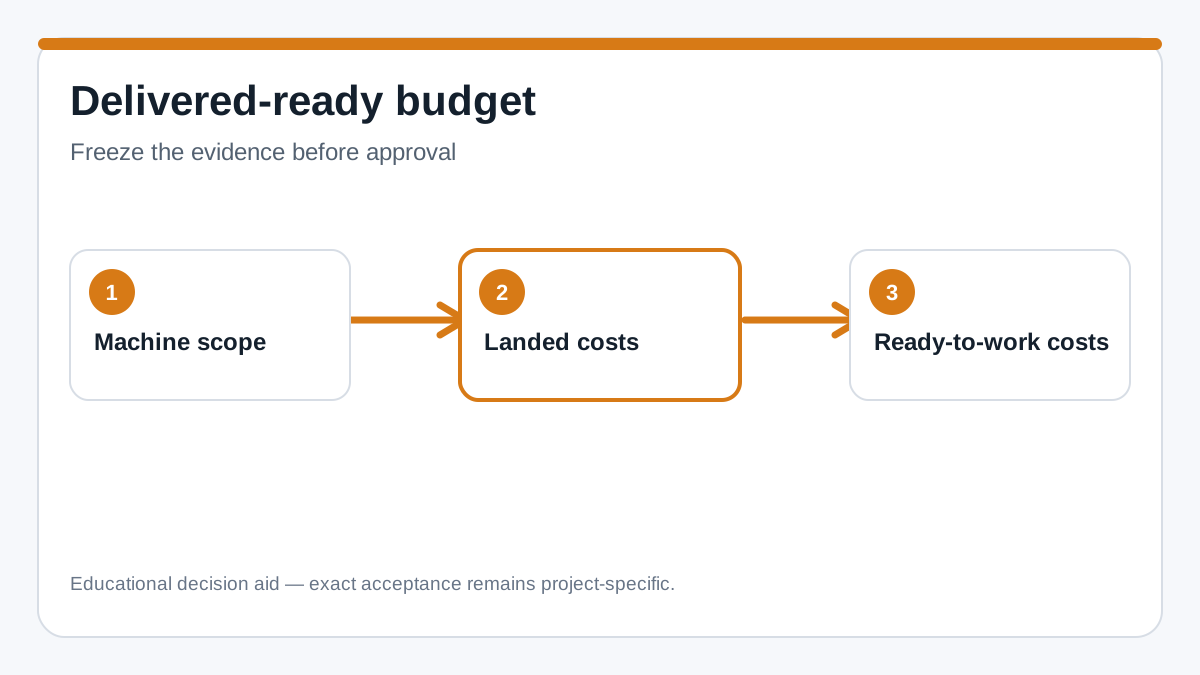
1. Define the exact backhoe loader being priced
Record the work, access, required dig and loader functions, four-wheel-drive requirement, steering mode, stabilizers, cab, transmission, tire specification, loader bucket, backhoe bucket, boom option, coupler, auxiliary hydraulics, attachments and transport limits. A compact tractor-loader-backhoe and a full construction backhoe are not one price class.
Use the exact machine configuration as the comparison owner. Model family, horsepower or dig depth alone cannot confirm the loader capacity, backhoe geometry, attachment interface, mass or transport fit needed for the job.Review the backhoe loader category
02
2. Put new, used and direct import on one boundary
Choose a comparison endpoint such as delivered to the named site, inspected, filled, configured with the required attachments, documented and ready for the first planned job. Record currency, date, tax treatment, commercial term, location and exclusions beside every figure.
A current manufacturer price is only a dated reference for one market and configuration. Bobcat lists a US starting price for its B760 and explicitly ties offers and final terms to conditions. Caterpillar’s pricing disclosures state that taxes, freight, delivery, attachments and protection plans may be excluded. Use those pages to understand scope—not to set a universal backhoe price.
| Path | Usually easiest to verify | Major unknown | Evidence gate |
|---|---|---|---|
| New dealer | Configuration, preparation and local support offer | Exclusions, options and actual transaction terms | Signed build and service scope |
| Used | Current asking price and visible machine | Wear, history, repairs and downtime | Serial-level inspection and records |
| Direct import | Factory configuration and export package | Landed logistics, compliance and local support | Incoterm, documents and responsibility matrix |
The table compares evidence paths, not which option is universally cheaper.
03
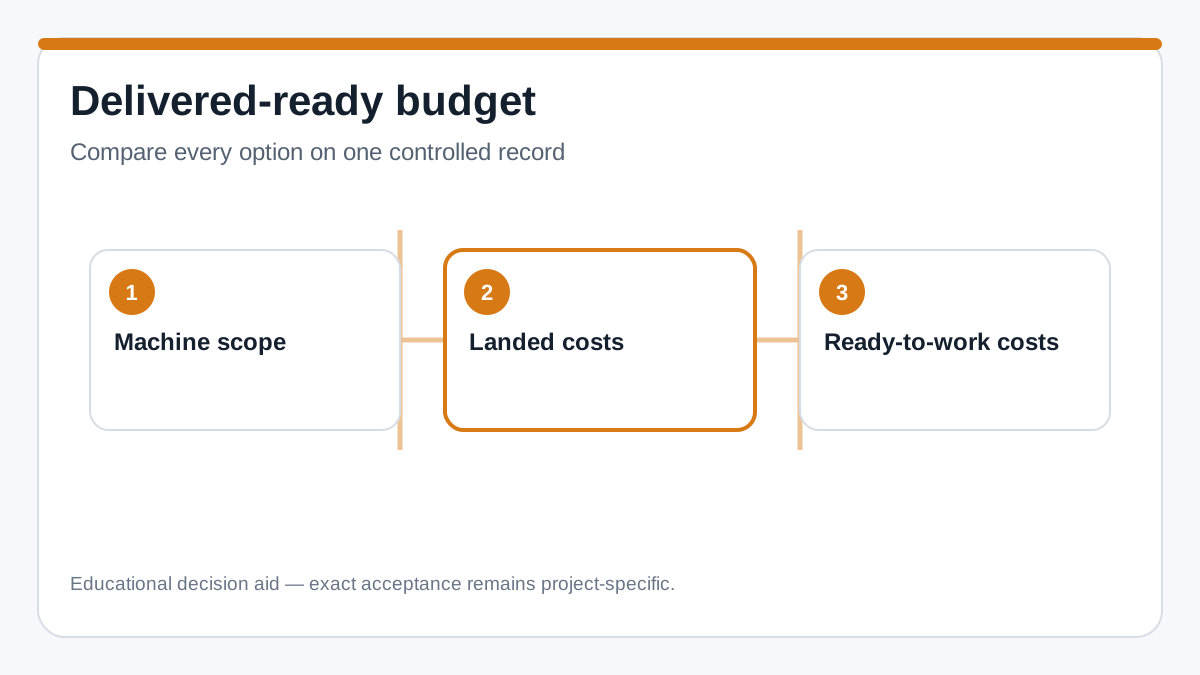
3. Build the delivered-and-ready cost stack
Use separate rows for machine and factory options; loader/backhoe buckets and work tools; seller fees; inspection; repairs; packing and origin movement; international or domestic freight; insurance if purchased; broker, customs and terminal items; inland delivery; unloading; assembly and commissioning; fluids and initial service; operator familiarization; manuals, diagnostics and starter spares; and a named contingency for unresolved risks.
Enter zero only when a written scope confirms that no cost applies. Otherwise use quoted, estimated with basis, variable, or unknown. Keep financing and accounting effects in a separate model reviewed for the buyer and jurisdiction.
04
4. Audit a used backhoe as two working systems
Inspect loader and backhoe functions together with the engine, transmission, axles, steering, brakes, tires, stabilizers, hydraulics, structure and cab. Verify serial identity, hours, service history, cold start, warm operation, leaks, drift, pins and bushings, cylinder rods, boom and dipper repairs, loader arms, bucket linkage and attachment interfaces.
Photographs and seller videos can screen a candidate but do not replace a competent in-person inspection when the consequence justifies one. Price known repairs and mark inaccessible or untested systems as risk rather than assuming they pass.
Use the site's inspection workflow to keep findings tied to the exact serial and configuration.Open the equipment inspection checklist
05
5. Control direct-import and delivery unknowns
Confirm the named Incoterm and place, packing dimensions and mass, loading, route, documents, emissions or engine evidence applicable to the destination, broker inputs, port or terminal exposure, inland movement, unloading and commissioning. Assign one responsible party to each handoff.
Do not publish a fixed duty, tax, freight or lead time. Classification, origin, destination, route and current regulations change the result. Obtain current advice from the responsible broker and authorities before commitment.
06
6. Compare ownership readiness after delivery
Ask who supplies filters, seals, hoses, wear parts, tires, buckets, teeth, pins, electrical components and diagnostic information. Record warranty exclusions, response route, travel or labor responsibility, remote support and expected lead times without converting them into guarantees.
A lower acquisition total can be the wrong choice if the machine cannot be serviced in the buyer's operating window. Conversely, do not assign a vague premium to support; price the parts, labor, backup and downtime assumptions the operation actually needs.
07
7. Release a quote only when the evidence aligns
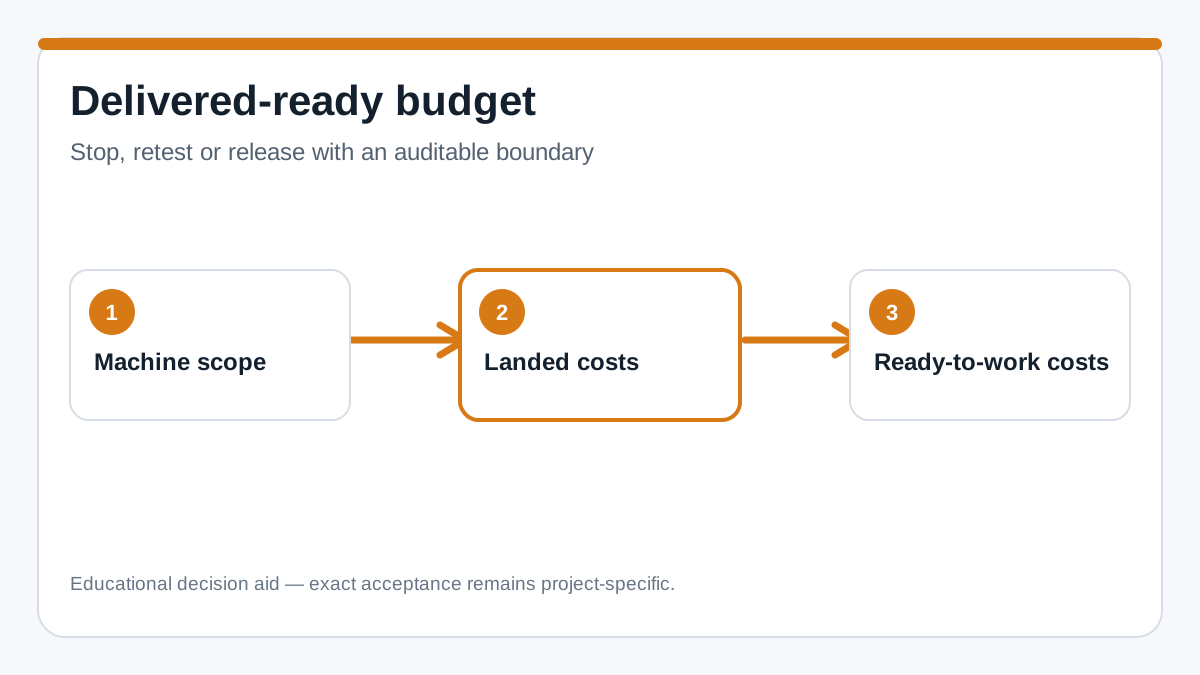
The final sheet should show exact configuration, included attachments, delivered-ready subtotal, known repairs or setup, support package, variables, unknowns and approval owner. Reject a comparison when configurations differ materially or a major condition, compliance or delivery item remains unbounded.
Send the same job, configuration and destination brief to every seller. Direct Excavator can review the request and supply an evidence-led quotation, but the final import, inspection and operating decision remains with the buyer and competent local parties.Request an equipment quote
09